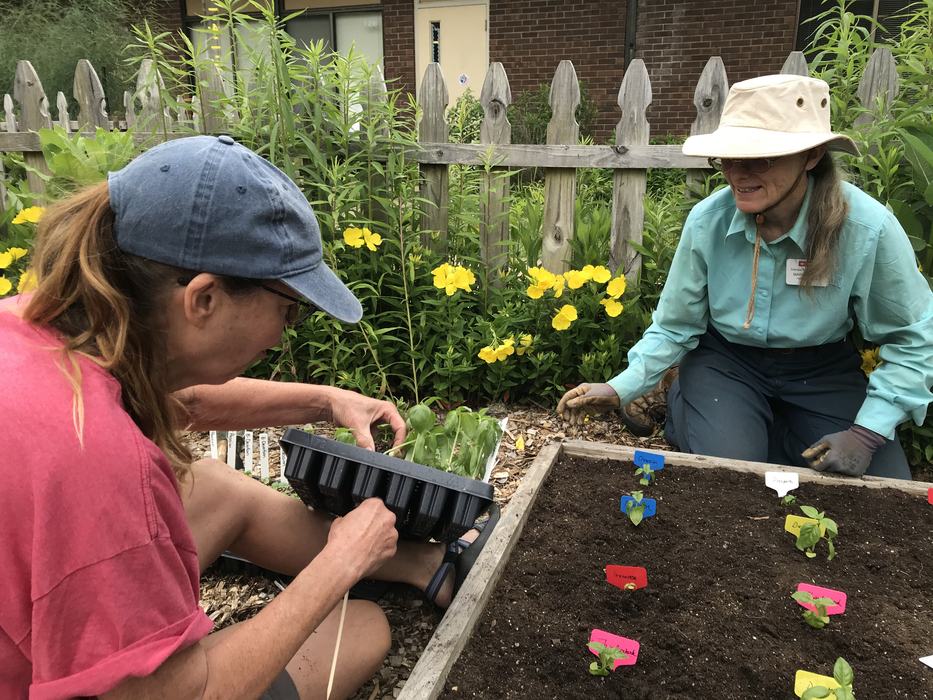
Volunteers with the NC State Extension Master Gardener℠ program participated in a delicious pilot project during the summer of 2021, and are preparing to take it to the next level in 2022. By growing a lot of basil in their yards and faithfully collecting data weekly, Master Gardener℠ volunteers are helping determine which varieties of sweet basil are most resistant to basil downy mildew (BDM), a disease that is often deadly to basil plants.
Thirty Master Gardener volunteers in four counties representing each growing region of NC (mountains, piedmont, coastal plain) set up test plots either in their backyard or at the local county Extension center. Five varieties of basil bred to be BDM-resistant were compared to the highly popular, yet susceptible ‘Genovese’ variety. Varieties in the trial were ‘Rutgers Obsession’, ‘Rutgers Devotion,’ ‘Rutgers Thunderstruck,’ ‘Rutgers Passion’ and ‘Prospera’.
Each week throughout the summer, volunteers examined their basil plants and rated the appearance of disease symptoms. Of course, resistance to BDM is a desirable trait, but gardeners and consumers want basil to taste good! To gauge the flavor of resistant varieties, volunteers conducted taste tests comparing BDM resistant varieties to ‘Genovese’ basil, the culinary favorite.
This trial will be expanded to include volunteers in more counties in 2022, after which the data will be analyzed to determine which varieties were most disease resistant and tasted best. The results will be shared in Extension publications, the Plant Toolbox, and reported in journal articles. Involving Master Gardener volunteers in applied research and sharing the results with gardeners in local communities supports the NC State Extension Master Gardener program mission to connect people to plants through science-based education and outreach.
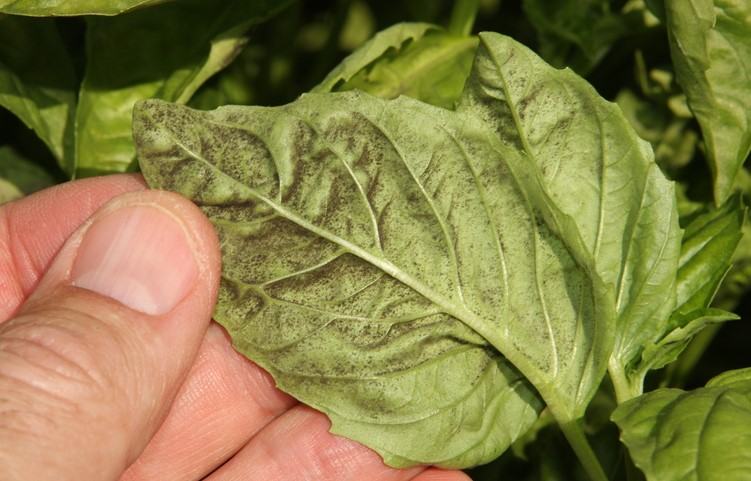
About BDM
BDM is caused by the oomycete Peronospora belbahrii, a fungal-like organism that reproduces via spores that travel on the breeze. It spreads during summer, especially during warm, humid weather, when spores are picked up by the wind and land on nearby plants.BDM spores don’t like cold weather, and don’t survive through winter in states like North Carolina where temperatures drop below freezing. Instead, it spends the winter further south in frost-free areas or in greenhouses. When the weather warms, spores catch a ride on the wind and travel long distances across state lines, usually arriving mid to late summer. For more information, check out this basil downy mildew fact sheet.
We extend a special thanks to Johnny’s Selected Seed for donating seed of the BDM resistant varieties for this trial.
Learn more about how you can be part of the NC State Extension Master Gardener program!