Does your basil look more like Big Bird than Kermit the Frog, with mottled, yellowing leaves that eventually turn brown? Basil downy mildew (BDM) is a possible cause of these symptoms, but what can gardeners do to combat this plant disease?
This summer, volunteers with the NC State Extension Master Gardener℠ program are working to answer this question. From the mountains to the coast, Extension Master Gardener volunteers are growing basil plants, monitoring them for signs of BDM, and recording data to determine which varieties stand up best to this destructive disease.Why Are the Leaves of My Basil Turning Yellow?
(Updated: July 6, 2022, 10:27 a.m.)
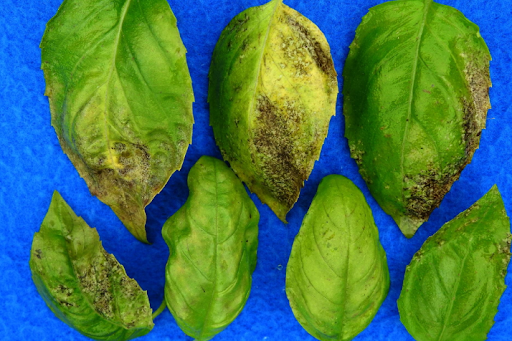
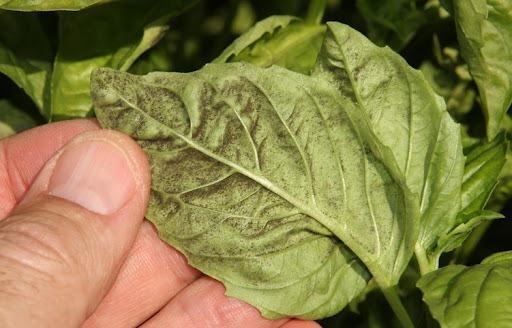
Once a BDM spore lands on a leaf and infects the plant, symptoms appear within ten days. The first sign of infection a gardener will notice is yellowing of the leaves, particularly in the leaf tissue between the veins. While yellowing, known as chlorosis, is also a symptom of nutritional deficiency, a look at the underside of the leaves can help confirm BDM. The presence of purple-brown spores on the bottom of the leaves is a sure sign of infection. Eventually, the yellow parts of the leaves turn brown, ultimately leading to the death of the entire plant.
Unfortunately, there is no easy fix for BDM. There are no products available to home gardeners that successfully control BDM. The good news is that plant breeders have developed new, BDM-resistant varieties of basil. But even among these new varieties, some will be more resistant, vigorous, and most importantly, more delicious than others.What Are Master Gardener Volunteers Doing In This Trial?
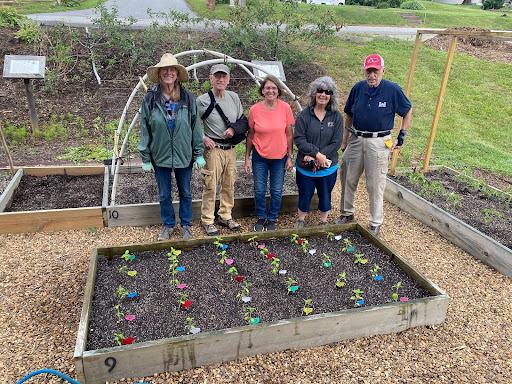
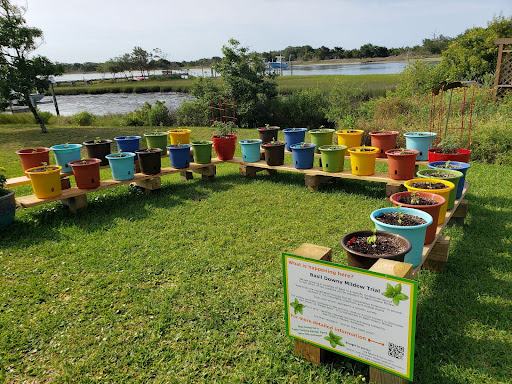
To determine which are varieties are most disease resistant and desirable to cooks and gardeners, Master Gardener volunteers have set up basil test plots in their backyard or at their local N.C. Cooperative Extension center to compare five basil varieties bred to be BDM-resistant to the ever-popular yet BDM-susceptible ‘Genovese’ variety. The varieties in the trial are ‘Rutgers Obsession-DMR,’ ‘Rutgers Devotion-DMR,’ ‘Rutgers Thunderstruck-DMR,’ ‘Rutgers Passion-DMR,’ and ‘Prospera.’
Each week throughout the summer, Master Gardener volunteers will examine each plant, note the appearance of BDM symptoms, and rate it from 0 to 3 based on a severity scale. Their work will help determine the best basil varieties to plant in NC.
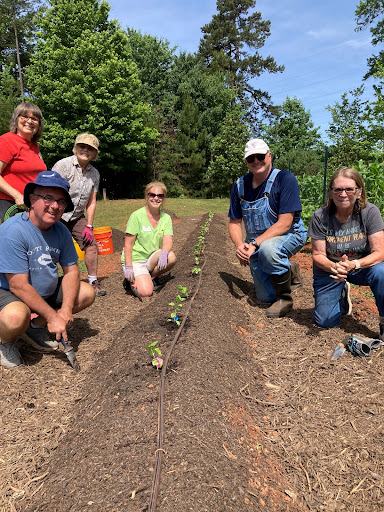
Of course, resistance to BDM is desirable, but most importantly, we want basil to taste good! To gauge the flavor of resistant varieties, volunteers will conduct taste tests comparing BDM -resistant varieties to ‘Genovese’ basil, the culinary favorite. Stay tuned to hear about the taste test trial they will conduct in July.

Is BDM Here Yet?
Want to see if BDM is in your area? Visit the AgPestMonitor, which tracks BDM throughout the United States. You can sign up for alerts to learn when BDM is reported in your county. Think you might have BDM? Use the Garden Help Directory to find contact information for your local N.C. Cooperative Extension county center.Stay tuned this summer for more information and photos on how the BDM project is going. Learn more about basil downy mildew from this NC State Extension fact sheet.
We extend a special thanks to Johnny’s Selected Seed for donating seeds of the BDM-resistant varieties for this trial.
About the NC State Extension Master Gardener Program
Extension Master Gardener volunteers connect people to horticulture through science-based education and outreach that empowers North Carolinians to cultivate healthy plants, landscapes, ecosystems, and communities.Learn more about how you can be part of the NC State Extension Master Gardener program!
We also have a few other email lists you can subscribe to.
Written By